This site is best viewed with the Adobe Flash Player plug-in, available from www.adobe.com


“We are extremely confident that two years of detailed discussions mean that this masterplan represents the aspirations and concerns of all the stakeholders involved, not least the Battersea community. It is a plan that, vitally, will finally deliver this important site’s regeneration and create a compelling and vibrant new urban quarter for London. At its heart will be the Power Station, giving new life for generations to come and standing as a commanding reminder of London’s industrial past and thrilling future.”

Robert Tincknell, Managing Director of Treasury Holdings UK and Director of Real Estate Opportunities plc.

Site History

A History of Controversy, innovation and pollution

Battersea Power Station was the first in a series of large coal-fired electrical generating facilities set up to solve the problems of Britain’s inefficient and fragmented electricity supply in the 1930s.

Sir Giles Gilbert Scott, the man behind the trademark red telephone box, played a key role in the design of Battersea Power Station – it was cutting-edge, but controversial. Londoners protested that the building would be an eyesore. Parliament debated the effects its pollution may have on public health, buildings, parks – and even works of art in the nearby Tate Gallery.

Station ‘A’ with two chimneys came on stream in 1933 with a second phase completed in 1957. The power station then generated 509MW providing a fifth of London’s power demand.

As expected, and despite attempts to minimise this, pollution was unavoidable. During its early years, the power station burned up to 4,000 tonnes of coal every week, belching vast amounts of CO2 and sulphur into the atmosphere. The heat generated as a by-product of power production was piped under the river to provide heat for the 11,000 residents of Churchill Gardens in Pimlico.

Before World War II, pioneering new devices were fitted to the chimneys to ‘wash’ sulphur out of the emissions in an effort to reduce airborne pollution. Unfortunately, the toxic effluent produced by this process was discharged into the Thames contaminating the water and destroying wildlife.

Due to continuing concerns over pollution and a shift in national policy in power generation, Station A was closed in 1975, followed by Station B eight years later.

Regeneration plans that failed to deliver

Battersea finally stopped producing power in 1983. However the building was listed in 1980, silencing any calls for its wholesale demolition.

Two major developers have tried unsuccessfully over the years to regenerate the site. The first, millionaire John Broome (creator of Alton Towers), demolished the roof and west wall to remove the giant turbines as part of his plans to create a massive theme park, scheduled to open in 1990.

Nothing more happened, and Battersea Power Station was left open to the elements.

Three years later, Parkview International took possession of the site. Parkview gained planning consent to develop restaurants, retail, cinemas and other cultural and commercial offerings within the existing building, alongside significant new development on the site.

The plans were never realised, and the Battersea Power Station site has lain dormant for quarter of a century.

The site was acquired by REO in December 2006. The first task was to review Parkview’s consented scheme which was almost 10 years old.

Following acquisition of the site, Real Estate Opportunities and Treasury Holdings UK decided that the existing planning permission was unviable and did not maximise the opportunity of this important site, at the heart of the Nine Elms area.

In addition, the public transport solution offered by the Parkview proposals was deemed inadequate to serve the wider Nine Elms project.

In a changing and more environmentally conscious world, the Parkview proposals also lacked a robust environmental agenda. As 21st Century property investors, REO and Treasury Holdings UK thought this should be an essential component of any plans to redevelop the site.

The evolving Masterplan

REO’s original Masterplan for the site centred on delivering a unique solution to achieving a carbon neutral approach to redeveloping the site.

Real Estate Opportunities (REO) launched its new vision for Battersea Power Station in June 2008. The Masterplan adopted REO’s six key objectives, which remain in place today:

The sensitive regeneration of Battersea Power Station
To ensure that the project is totally deliverable
To facilitate a sustainable public transport solution
The creation of a low carbon development
To act as a catalyst for regeneration of the Nine Elms corridor
The delivery of a sustainable mixed use development, which will ensure marketability and strong demand

The original Masterplan achieved these objectives by proposing the most advanced sustainable development ever to be built in the country. It included a spectacular 300m high Chimney and Ecodome, which would reduce energy demand in the proposed buildings by 67%.

The Chimney would draw air up through a campus of high quality individual office buildings, covered by the light, transparent Ecodome. The Chimney would also house apartments with panoramic views over London.

The original Masterplan was welcomed by many key stakeholders and there was overwhelming support from the public for the concept of delivering a carbon neutral development on the site. However, there were concerns about the scale and mass of the Ecodome and the height of the Chimney, which resulted in the design evolving following initial consultation.


The evolving Masterplan 2

Following the largest public consultation ever conducted in the UK on a development project, Real Estate Opportunities responded to comments with an amended Masterplan, published in December 2008.

Following initial consultation, Real Estate Opportunities and Rafael Viñoly were keen to maintain the overall concept of the Masterplan, particularly the Ecodome and Chimney, but adjusted the mix and location of buildings to respond to urban design issues and to reflect the views of the public and stakeholders.

In particular, the frontage of the development on Battersea Park Road was redesigned to make it more accessible and to tie it into the local neighbourhood. The Ecodome was relocated towards the River Thames and reduced in size and massing.

The height of the Chimney was also reduced to 250 metres in response to the technical requirements of a smaller Ecodome, to improve its appearance and to address concerns about its impact on views over the Houses of Parliament.

The mix and scale of the revised Masterplan was a reflection of views expressed during the six months of consultation. However, following further consultation, Real Estate Opportunities received very clear guidance that the development at Battersea Power Station should not be visible behind the Houses of Parliament. As a result, the Masterplan has continued to evolve as it addresses this and many other comments.


Nine Elms

Nine Elms - the newest place in town

“There’s no bigger regeneration opportunity in the Capital than Nine Elms. It’s hard to think of another district of Central London that offers so much potential for new development.”
Councillor Edward Lister – Leader of Wandsworth Council

Nine facts about Nine Elms
1. Nine Elms was first occupied in the Bronze Age.
2. Nine Elms was the original mainline railway terminus serving southern England.
3. The Nine Elms corridor has nearly one mile of frontage to the River Thames.
4. Nine Elms is serviced by four train stations and one tube station. The East London Line will be extended to Wandsworth Road by 2012. The proposed extension of the Northern Line to Nine Elms and Battersea Power Station will make the area even more accessible.
5. The 75 year old Battersea Power Station is the biggest brick building in Europe (some say the world).
6. The Nine Elms area is Wandsworth’s largest concentration of employment. Almost 14,000 people work there.
7. NIne Elms will become the home of the new United States Embassy in London.
8. Nine Elms is Central London’s larder - New Covent Garden Market supplies approximately 40% of fresh fruit and vegetables eaten in London’s hotels and restaurants.
9. Nine Elms has an area of 350 acres, with over 200 acres having development potential. It has the potential capacity to provide 27,000 new jobs and 16,750 new homes by 2026.


Delivering the Nine Elms opportunity

204 Acres
3/4 mile to Sloane Square
1.4 miles to Hyde Park Corner
1.8 miles to Berkeley Square

The Nine Elms area provides over 200 acres of development land. While, currently, light industrial in character, the area is now being planned for major regeneration, all within a mile of the Houses of Parliament.

The Greater London Authority is currently preparing a planning framework for the Vauxhall, Nine Elms and Battersea Opportunity Area, which is due to be published for consultation in June 2009. The area is also recognised in the emerging Wandsworth Core Strategy as a major opportunity for regeneration. Wandsworth Council recently launched a prospectus for the area, which provided an introduction into the key stakeholders and their vision for regeneration in Nine Elms.
For a major regeneration area, Nine Elms benefits from being in limited land ownership. All of the key land owners are now promoting or considering plans for their sites. These include the planned U.S. Embassy at Ponton Road and the recent approval by the Government for Covent Garden Market Authority to begin selecting a private development partner. Over the next ten to fifteen years, Nine Elms will emerge as one of London’s greatest new places for working, living and visiting.


Our Proposals

New life for the Power Station

As well as renovation of the famous four chimneys, Real Estate Opportunities’ masterplan for the existing Power Station building includes:

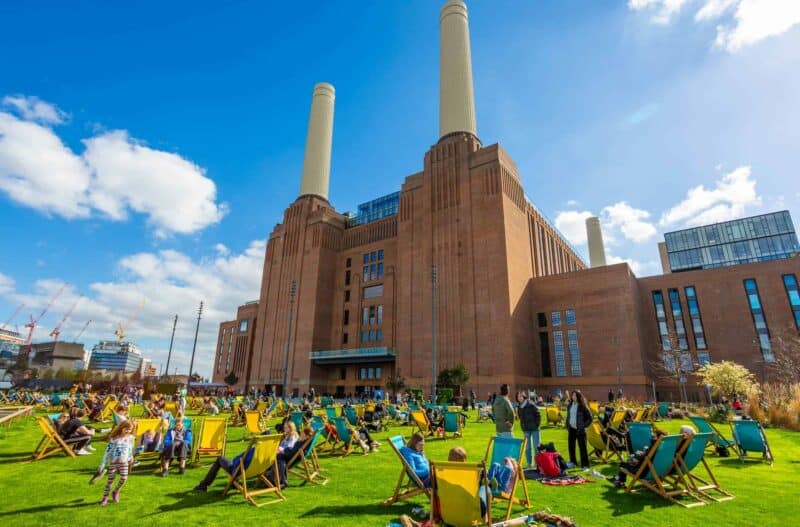
Preserved space immediately around the Power Station maintaining the setting and character of the iconic building
A fantastic urban square at the entrance to the Power Station, which will become a stunning event space and will connect with the important new transport interchange
The first zero carbon office space in Central London
A new section of the river walk and 6 acre riverside park to the north of the Power Station
Turbine Halls A and B, each a similar size to the Turbine Hall in the Tate Modern, will become new event areas giving public access to the many different uses in the building
A modern conference centre including the largest ballroom in London
A green energy plant at foundation level – used to power the rest of the site
Battersea Power Station will be generating power again, but it will do so in harmony with the site and the environment. Battersea will generate a new energy for London.


Public Realm

Proposals for the public realm centre on the Power Station itself, and on unlocking new lengths of the Thames riverside to the public in a new park. The streets and spaces between Battersea Park Road and the Power Station will offer a high quality environment. We will create a series of new, carefully choreographed views and vistas from local roads, presenting the iconic Power Station architecture from beyond the confines of the site.

A defining principle of Rafael Viñoly’s masterplan has been to establish a series of wonderful new public spaces, introducing new life and art to the area.

The Prospect
The Prospect presents dramatic views of the Sir Giles Gilbert Scott architecture from Battersea Park Road and draws people into the site. The views of the Power Station are enhanced by the reflections in a series of large pools which lead towards a new town square at the Station’s south entrance. The gradient in the Prospect rises gently from Battersea Park Road to the Power Station, and a central cascade makes full use of the level change. The sunny aspect, lawns and trees make this a perfect location for an informal lunch break.

The High Street
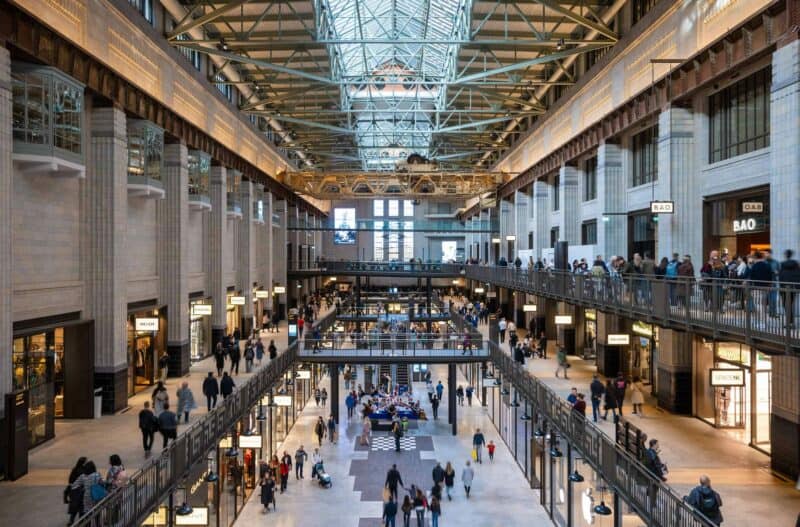
Linking the new Underground Station to the Power Station is a retail street featuring two levels, bridged at frequent intervals. Trees that emerge from the lower level serve as canopies to the upper levels.

The Circle
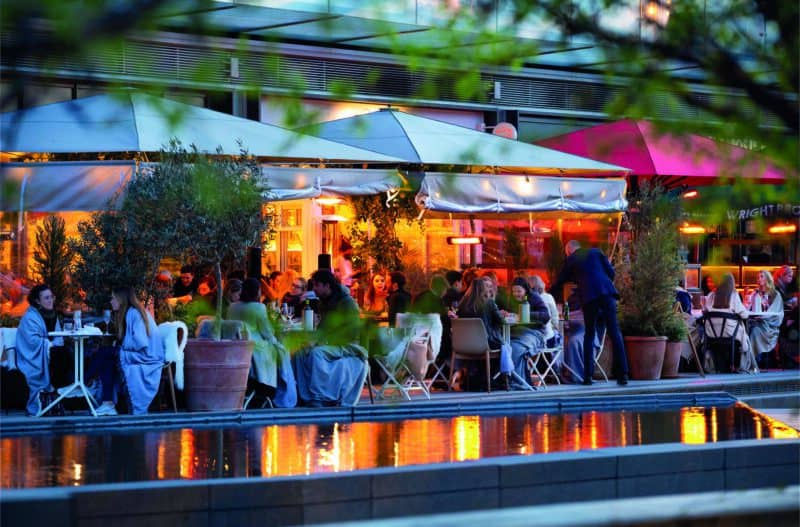
Large, still pools encircle the Power Station and form the edge to a street unique in London. Trees line the new buildings to the east and west, and the limited vehicle access and low speed environment make for a pedestrian dominated circular walk. The Circle will feature an urban running track, and could be used for many events and activities.

The Town Square
At the base of the Power Station will be a new urban square for London. It will be an active place encircled by cafes and restaurants, and will benefit from excellent sunlight, particularly for an evening drink.


Park and River Walk

The Masterplan includes a six acre Riverside Park in front of the Power Station. This will be a wonderful facility for residents and visitors to the site and will also form an extension to Battersea Park.

A new public park for London with the backdrop of the reborn Power Station will form an impressive view from the north bank of the Thames. The park will function as a leisure destination for visitors and a local park for everyday use of residents. It will offer both activity and calm on around 350m of newly opened Thames frontage. Enhancements to the existing jetty will make it an integral part of the park and give access to water buses. The Park’s facilities will complement those of Battersea Park – to which there will be a direct connection beneath Grosvenor (railway) Bridge and via the Riverside Walk.

The Park will provide a range of open space facilities, including lawns for sunbathing and a game of football, children’s play areas and quiet landscaped areas. With the setting of the Power Station and the River, it will become a great place to relax. It will also be surrounded by restaurants and cafes, which will spill out into the park and provide spectacular dining opportunities.


Working

Battersea Power Station will provide the most exciting building in London for office occupiers. It will be a unique address for creative businesses.

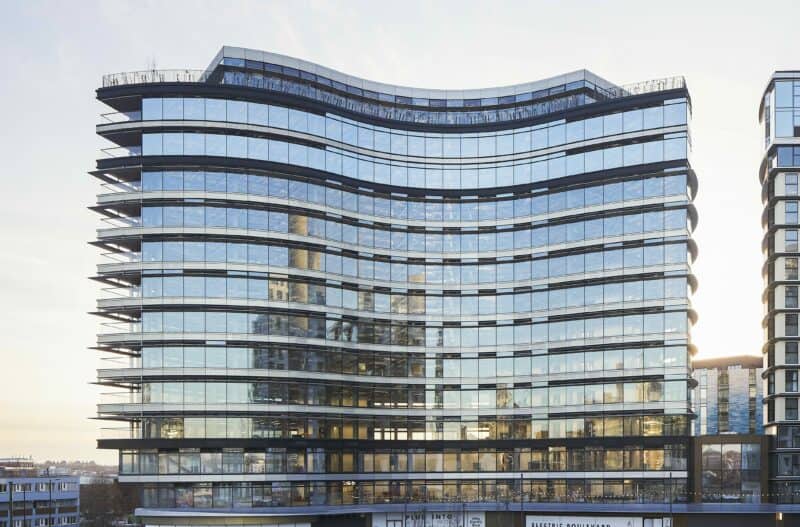
The regeneration of Battersea Power Station will be a new flagship mixed use development for London and a new centre for the Vauxhall/Nine Elms/Battersea area. It will balance the collection of uses and high density development at Vauxhall and support the new communities and uses that will establish in the Nine Elms area.

World class office space both within and outside of the Power Station building, together with the many other uses, will serve to create a new commercial centre for London. Battersea Power Station will become one of London’s great addresses for cutting-edge modern businesses, which will be attracted here by the opportunity to be associated with a world famous building and to benefit from the dynamic mix of uses.


A sustainable transport solution

Achieving successful large scale regeneration in this area will require a significant change in public transport accessibility. Limited improvements would not provide enough capacity or connectivity for any significant development to take place in Nine Elms, and would not deliver major benefits to the local area.

Major new transport infrastructure is needed.

In 2008, Real Estate Opportunities’ transport consultants working with Transport for London (TfL) began to investigate ways to improve public transport in Nine Elms. The most viable and credible solution is to extend an existing system – and this means the Underground!

Vauxhall is the closest interchange, but the station is already at capacity, plus added demand could cause problems on the Victoria line.

Working with TfL, feasibility studies into extending the Northern line from Kennington have been carried out. At peak times the proposed new extension could carry 24,000 people per hour in both directions at two minute intervals – with a journey time of around 11 minutes to Bank and Leicester Square.

Privately funded and subject to permissions, the new tube extension could be operating by 2015.

Two new tube stations, along with enhanced existing overground rail connections and buses, and a new river bus pier would make Nine Elms well connected and easily accessible.

Since June 2008, Real Estate Opportunities has been working with Transport for London and London Underground to investigate the feasibility of the Northern Line Extension to Nine Elms.

A series of detailed reports have been completed, which demonstrate that the tube extension is financially viable, feasible from an engineering point of view and would bring major benefits to Nine Elms and the surrounding area.

The GLA and TfL have also undertaken an assessment of ways to improve public transport in Nine Elms. The study concludes that the Northern Line extension is needed to achieve high density development in the area.

REO will shortly begin the preparation of a Transport and Works Act application for the tube extension.


Sustainability

The Power Station will be developed as Europe’s largest carbon neutral building.

One of Real Estate Opportunities’ key objectives is to create a low carbon development at Battersea Power Station. This was a driving force behind the proposed Ecodome and Chimney.

Concerns about the impact on views of the Houses of Parliament has led to a major revision to Rafael Viñoly’s Masterplan, which, in turn, affects the sustainability strategy.

In the revised Masterplan, the Power Station itself will be zero carbon, with low energy buildings surrounding the Power Station. Our new aim is to reverse the enormous historic carbon footprint of the Power Station.

Through the introduction of a decentralised energy generation facility, the project will be highly sustainable and will be one of London’s most environmentally conscious developments.


Lifestyle

The Power Station site will deliver a wide range of community and cultural facilities, which will help to create a world class place and to integrate the site with the local area. A key theme of creativity will run through all aspects of the development.

At our first exhibition, we asked visitors to list the facilities that they would most like to see provided on the site.

These included:
Open Space
Arts Centre
Public Toilet
Post Office
Museum
Library
Gym
Health Centre
Internet / Wi-Fi Zone
Youth Centre
Dentist
Community Hall
Crèche
Pharmacy

Our plans include many of these facilities, including areas of new public open space, cultural facilities, health facilities, a gym and community facilities which could include a school, nursery and crèche.

Because of its mix of uses Battersea Power Station will be a place where people want to live, to work and to visit for shopping and leisure.

The development proposals provide for around 8m sq ft of mixed use development, including new homes, shops, restaurants, cafes, offices, cultural and community uses.

The Power Station itself will be a striking marker of renewal and will be a true symbol of mixed use development, containing offices, retail, residential, event space and cultural uses.

Battersea Power Station is a hugely ambitious project but one that is deliverable and viable, and will create a world class place that Wandsworth, London and the UK will be proud of. It will enhance the quality of life for all who visit, live or work in the area.

Battersea Power Station will be a great place to call home. We will deliver a wide range of housing choices.

The approach to the Battersea Power Station project is simple. To ensure delivery and sustainability both now and in the long term, the Power Station will host a network of land uses, spaces and attractions. It is important that these integrate and overlap with each other. The built form will be world class, but it is the activities which Battersea Power Station will support, day in day out, which will be the indication of vitality and that are ultimately necessary for development to be viable for generations to come.

Diversity and activity at Battersea Power Station will be driven by the successful integration of the following land uses:
Residential
Business
Hotel
Retailing
Leisure
Community uses
Arts, culture and entertainment

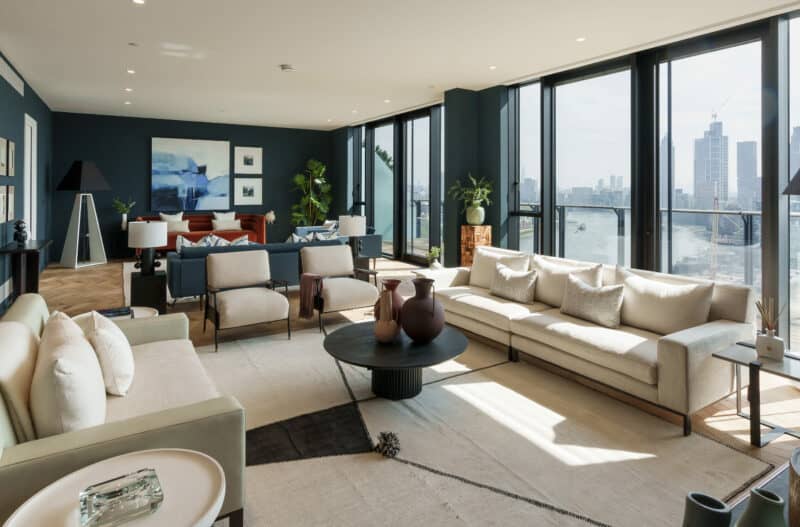
Battersea Power Station will be a fantastic place to live and will provide homes in easy reach of new job opportunities, cultural attractions, retailing and leisure. New housing will be built to high environmental standards and will be designed by world renowned architects and designers. A range of housing choices, in terms of the mix of housing sizes and types, will be offered, suitable for all ages.

Housing will benefit from new high quality public spaces and new connections to existing spaces, such as Battersea Park. All homes will have access to either private or semi-private space and many will enjoy spectacular views of the Power Station and the river.


Creating a new London district

The development will create an entirely new district for London, and a new vibrant neighbourhood for Wandsworth supported by significant improvements to public transport.

Working closely with our neighbours, Real Estate Opportunities Limited and Treasury Holdings want to ensure that this development is welcomed by local people. The plans will ensure:
The whole site will be open and fully accessible to everyone
This is a very safe and well managed environment
Battersea Power Station is protected and preserved for the long-term.

The site will be well connected and easily accessible through a new tube connection and significant improvements to other public transport means. It will deliver the following major additional benefits:
Dramatic improvements to cycle paths and pedestrian routes
A fantastic new river walk to Battersea Park
The opening of a new section of fully accessible riverside in Nine Elms
A wide variety of shops, cafes, restaurants and community and leisure facilities
Approximately 3,700 new homes
Over 15,000 new and varied job and training opportunities for local people
New community facilities
New cultural facilities

IT WILL HAPPEN!
We are committed to working openly with our neighbours. Please give us your suggestions and comments on the kind of facilities, shops and improvements we could make to your area through our questionnaire.


The Team

Real Estate Opportunities

Real Estate Opportunities Limited, whose ordinary shares are listed on the London, Dublin and Channel Islands Stock Exchanges, owns a wide portfolio of distinctive and valuable properties in Ireland and the UK. The company’s investment
and development portfolio includes land, properties and developments in all of the major sectors of the property market including office, retail, residential and industrial.


About the development manager

Battersea Power Station is a development managed by Treasury Holdings UK on behalf of Real Estate Opportunities Limited.

Treasury Holdings is an international real estate company established in 1989. It now has four offices across the globe, and a track record of successful project delivery, including schemes in Dublin, Shanghai, St Petersburg and China – where China Real Estate Opportunities and Treasury Holdings China are developing the world’s first sustainable, environmentally-responsible eco-town.

The developer has a proven commitment to long-term environmental protection. It is the only real estate company in the world to have a dedicated environmental division.
Currently developing the world’s largest offshore wind farm, Treasury Holdings holds over 100 patents for a variety of new and exciting environmental technologies as well as working on combined heat and power plants, forestry projects, ice storage air cooling and waste-to-energy systems.

Following assessment of its own emissions, Treasury Holdings UK was awarded Carbon Neutral Company status in 2008.


About the Masterplanner

One of the world’s leading architects, Rafael Viñoly, has been working hard to design plans that overcome the many challenges of the site.

“The challenge of the Battersea Power Station Redevelopment Plan is to overcome the odds of its unresolved history with a vision of the future that may seem today to be beyond the reach of normal optimism.

It is precisely in these moments that a realistic view as well as an inspired implementation plan is required. A vision that confronts the infrastructural deficiencies of the site and the inherent cost of the heritage obligations with a bold but pragmatic approach. The plan addresses first the need to improve its accessibility with a massive contribution to the construction of the extension of the Northern Line; and brings back the original function of the Power Station with a renewable energy source.

This plan is deliverable because it grows from needs that are not self promoted but real, and, fundamentally, because it recognizes the extraordinary opportunity of the borough of Wandsworth to become the natural extension of Central London.

The project proposes a level of mixed use density consistent with this opportunity, respecting both the iconic nature of the existing building, and the view management framework that is designed to protect the World Heritage sites. It provides more than 50 percent of the available land for public use and redefines the traditional typology of terrace housing to frame the setting of the existing building as the compositional center of the complex.” Rafael Viñoly

Born in Uruguay and raised in Argentina, Rafael Viñoly has been practicing architecture for forty-five years and has completed many critically acclaimed civic projects, master plans, private and institutional commissions throughout the United States, Europe, Latin America, Asia and the Middle East.

The work of Rafael Viñoly Architects, founded in New York in 1983 has been marked by his dedication to designs that deliver cultural and social meaning. His work is consistently driven by the belief that the essential responsibility of architecture is to generate the most elegant solution within the economy of each project. The firm has expanded to include offices in London, Los Angeles and the Middle East, as well as site offices around the world.

Viñoly has been working on the proposals for Battersea Power Station for more than two years, developing a design that maximises the opportunities and the challenges of the site. Viñoly’s practice also designed the recently approved 20 Fenchurch Street office tower in the City of London.

In addition to Viñoly’s many successes in international competitions, his work has been recognised in the world’s leading design publications. His buildings have won numerous awards of excellence and he is a Fellow of the American Institute of Architects, a member of the Japanese Institute of Architects, an International Fellow of the Royal Institute of British Architects, and a member of the Sociedad Central de Arquitectos.


Contact Us

Press enquiries 020 7259 0503

If you live locally and have questions about the plans call 0845 262 2625

Calls from a landline are charged at your local rate, contact your local provider for information. Call charges to this number from mobile phones vary.

info@battersea-powerstation.com


Site designed by Wordsearch